 September 07, 2026 - BY Admin
The Role of Software in Transforming Modern Business and Everyday Life
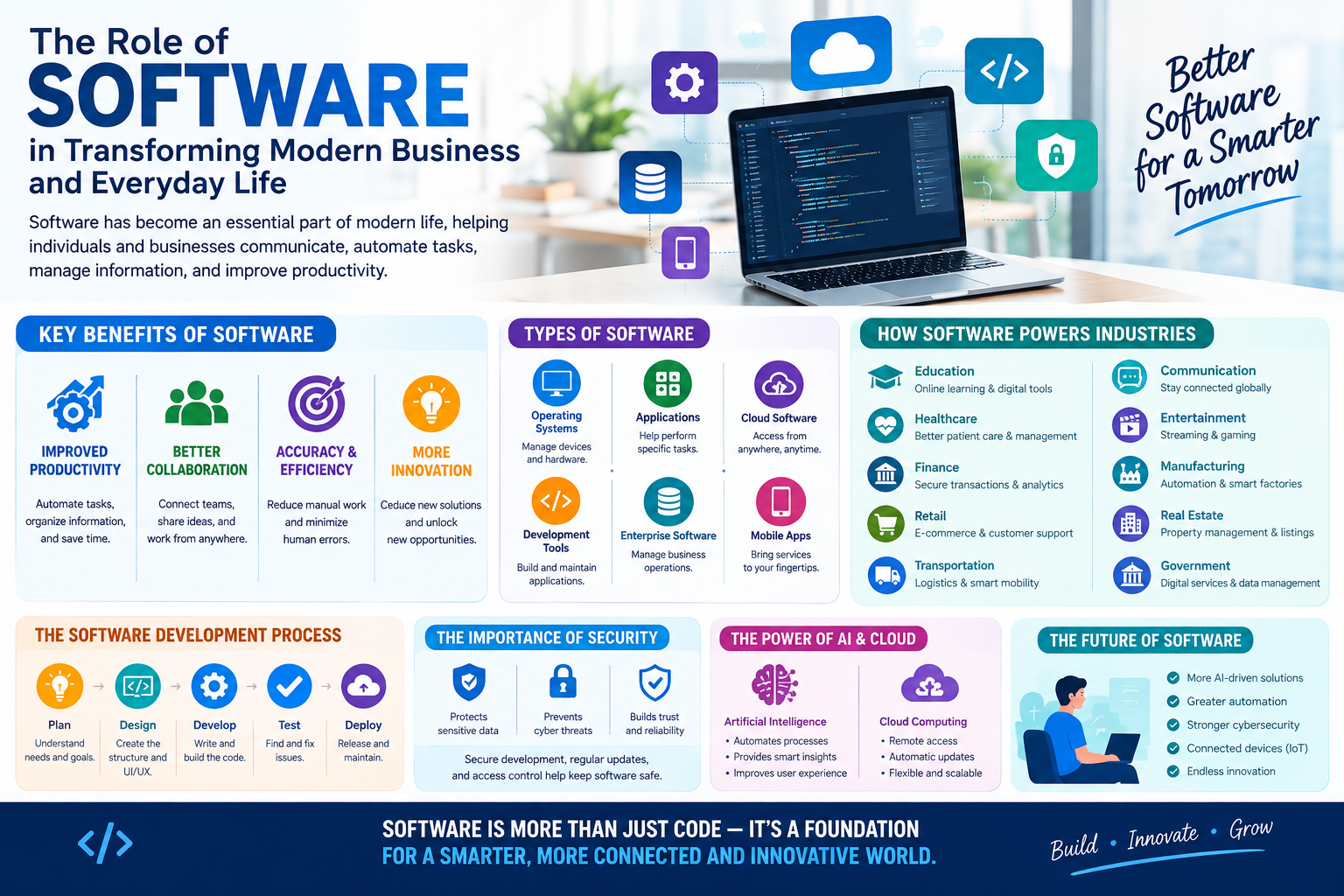
Software is one of the most important technologies in the modern digital world. From mobile applications and business platforms to operating systems and cloud services, software enables computers and digital devices to perform useful tasks. It has transformed the way people work, communicate, learn, shop, and manage everyday activities.
One of the biggest benefits of software is improved productivity. Applications can automate repetitive tasks, organize information, manage schedules, create documents, and support collaboration. Businesses can use software to reduce manual work and allow employees to focus on more important and creative responsibilities.
Business software has become essential for organizations of all sizes. Customer relationship management systems, accounting applications, project management platforms, human resource tools, and enterprise software help companies manage different areas of their operations. These solutions can improve efficiency while providing businesses with better visibility into their processes.
Cloud-based software has also changed the way applications are accessed and managed. Instead of installing every application directly on a computer, users can access many services through the internet. Cloud software supports remote work, collaboration, automatic updates, and flexible access from different devices.
Software development is another important area of the technology industry. Developers use programming languages, development frameworks, databases, testing tools, and version-control systems to create applications. A structured development process helps teams design, build, test, maintain, and improve software over time.
Artificial intelligence is also influencing modern software. AI-powered applications can analyze information, automate certain processes, provide recommendations, and assist users with various tasks. As AI technology continues to develop, software applications are becoming increasingly capable of adapting to different user requirements.
Security is an important consideration throughout the software lifecycle. Applications can contain vulnerabilities that may expose users or organizations to security risks. Secure development practices, regular updates, vulnerability testing, access controls, encryption, and security monitoring can help reduce these risks.
User experience is equally important when creating successful software. An application should not only provide useful functionality but should also be easy to understand and navigate. Clear interfaces, simple workflows, responsive performance, and accessibility can make software more convenient and enjoyable for users.
Software testing plays a critical role in maintaining quality. Testing teams identify functional problems, usability issues, performance concerns, compatibility problems, and security weaknesses before software is released or updated. Continuous testing can help organizations deliver more reliable applications and reduce the risk of problems reaching users.
Software also supports education, healthcare, finance, entertainment, retail, transportation, communication, and many other industries. Organizations can use specialized applications to solve industry-specific problems and improve the services they provide.
The future of software will continue to evolve with advancements in artificial intelligence, automation, cloud computing, cybersecurity, connected devices, and other technologies. Businesses and individuals who understand how to use software effectively can take advantage of these developments and adapt to changing digital environments.
Ultimately, software is much more than a computer program. It is a foundation of the modern digital world that helps people solve problems, automate processes, communicate, manage information, and create new opportunities. As technology continues to advance, software will remain an important driver of innovation and digital transformation.