 November 16, 2026 - BY Admin
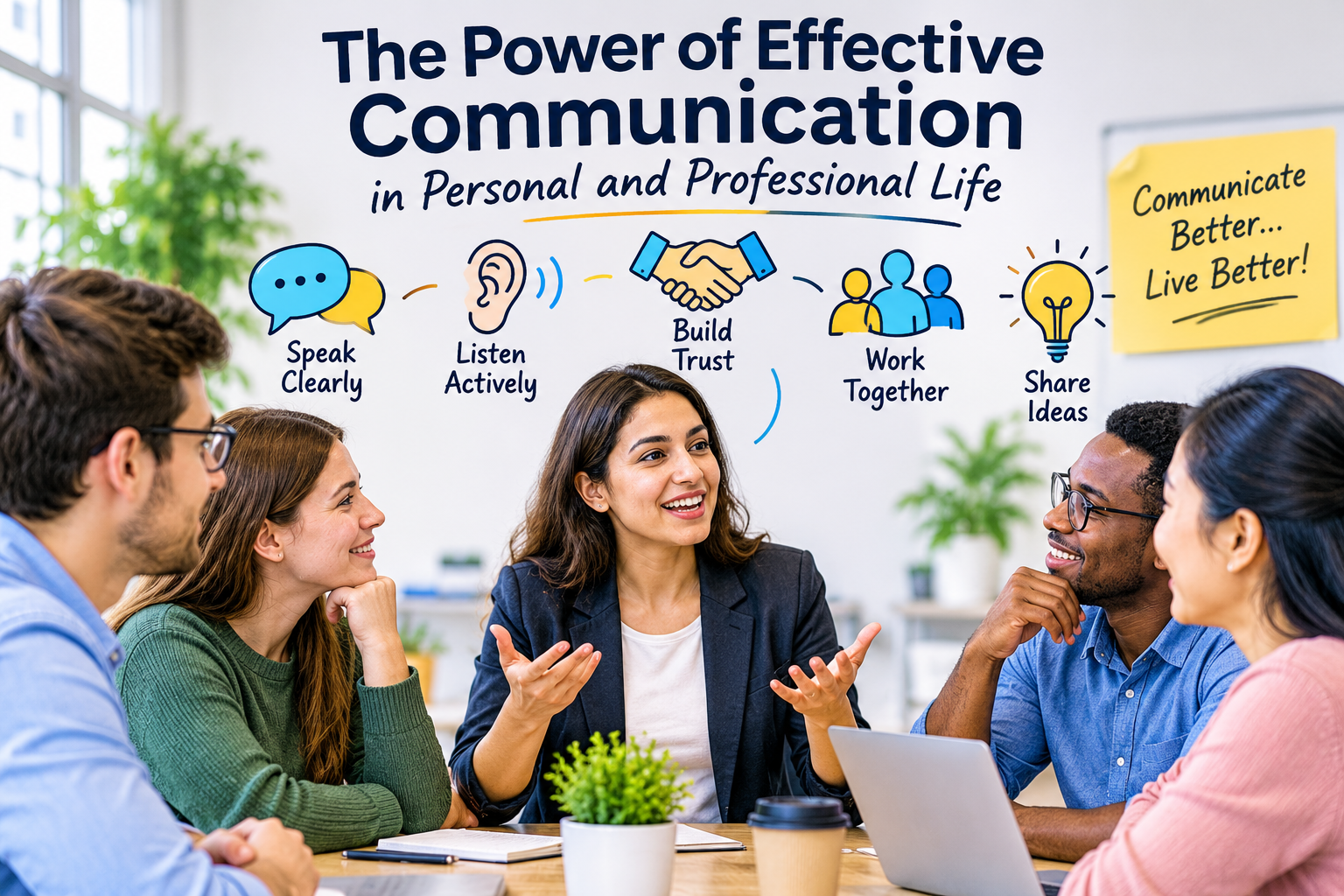
The Power of Effective Communication in Personal and Professional Life
What Is Effective Communication?
Effective communication is the process of sharing information, thoughts, and ideas in a clear and meaningful way. It involves speaking, listening, writing, and understanding other people's perspectives.
Good communication is not just about delivering a message. It also involves ensuring that the message is understood correctly and that everyone involved has an opportunity to express themselves.
Why Is Communication Important?
Communication plays an important role in almost every part of daily life. It helps people exchange information, solve problems, make decisions, and develop meaningful relationships.
Some important benefits of effective communication include:
Builds trust and understanding.
Reduces confusion and misunderstandings.
Improves teamwork and collaboration.
Supports better decision-making.
Strengthens personal and professional relationships.
Increases confidence and productivity.
Different Types of Communication
People communicate in different ways depending on the situation, audience, and purpose.
Verbal Communication: Involves sharing information through spoken words, such as conversations, meetings, presentations, and discussions.
Nonverbal Communication: Includes facial expressions, gestures, eye contact, posture, and body language that support or influence spoken messages.
Written Communication: Uses emails, reports, messages, letters, and documents to share information clearly and professionally.
Visual Communication: Uses images, charts, diagrams, presentations, and graphics to explain information in an understandable way.
Digital Communication: Includes video calls, messaging platforms, social media, and collaboration tools that connect people across different locations.
The Importance of Active Listening
Listening is just as important as speaking. Active listening means giving full attention to the person communicating, understanding their message, and responding thoughtfully.
Good listening habits include:
Avoid interrupting while someone is speaking.
Pay attention to the speaker's main points.
Ask questions when something is unclear.
Acknowledge different opinions.
Provide relevant and respectful feedback.
Active listening helps build stronger relationships and prevents unnecessary misunderstandings.
Communication in the Workplace
Effective workplace communication helps employees understand responsibilities, coordinate tasks, and work toward common goals.
Managers can communicate expectations clearly, while employees can share progress, ask questions, and report challenges.
Regular meetings, clear documentation, feedback sessions, and collaboration platforms can improve information sharing across departments.
A workplace that encourages open communication can create a more supportive and productive environment.
The Role of Communication in Business
Communication is essential for building successful business relationships. Companies communicate with customers, employees, suppliers, partners, and other stakeholders every day.
Professional communication helps businesses explain their products and services, respond to customer concerns, negotiate agreements, and maintain their brand reputation.
Clear communication also helps organizations manage changes, coordinate projects, and make informed decisions.
Digital Communication in the Modern World
Technology has changed how people communicate. Email, instant messaging, video conferencing, and online collaboration platforms allow individuals and organizations to connect quickly.
Digital communication supports remote work, international partnerships, online education, and customer support.
However, digital messages can sometimes be misunderstood because they lack facial expressions and vocal tone. Using clear language, appropriate wording, and professional communication practices can help avoid confusion.
Overcoming Common Communication Barriers
Communication problems can occur for several reasons, including language differences, distractions, unclear instructions, cultural differences, and poor listening habits.
Common ways to overcome these barriers include:
Use simple and understandable language.
Choose the right communication method.
Avoid unnecessary technical terms.
Encourage questions and clarification.
Respect cultural and personal differences.
Confirm important information in writing.
Minimize distractions during conversations.
Recognizing communication barriers is the first step toward creating better interactions.
Improving Public Speaking and Presentation Skills
Public speaking is an important communication skill in education, business, and professional development.
A good presentation should have a clear purpose, organized information, and an appropriate delivery style.
To improve public speaking:
Understand your audience.
Organize your main points.
Practice before presenting.
Speak clearly and at a comfortable pace.
Maintain appropriate eye contact.
Use visual materials when helpful.
Prepare for questions and feedback.
Regular practice can improve confidence and make presentations more effective.
Communication and Teamwork
Successful teamwork depends on people sharing information, understanding responsibilities, and supporting one another.
Team members should communicate progress, discuss challenges, share ideas, and provide constructive feedback.
Respectful communication encourages participation and helps teams solve problems together.
When everyone understands the shared goals, collaboration becomes more organized and productive.
Developing Emotional Intelligence
Emotional intelligence helps people recognize and manage their own emotions while understanding the feelings of others.
It plays an important role in communication because emotions can influence how messages are delivered and received.
People with strong emotional awareness are often better prepared to handle disagreements, respond calmly to criticism, and communicate respectfully during difficult situations.
Developing empathy, patience, and self-awareness can improve both personal and professional interactions.
Tips for Becoming a Better Communicator
Improving communication requires regular practice and a willingness to learn.
Here are some practical habits to develop:
Think before speaking or writing.
Be clear, direct, and respectful.
Listen carefully before responding.
Adjust your communication style to your audience.
Ask for feedback and learn from it.
Avoid assumptions and clarify unclear messages.
Practice writing professional emails and messages.
Stay calm during disagreements.
Small improvements in everyday communication can create meaningful long-term benefits.
The Future of Communication
Communication continues to evolve with advancements in artificial intelligence, digital collaboration, translation technology, and virtual communication platforms.
Businesses and individuals can now connect across geographical boundaries more easily than ever before.
AI-powered tools can assist with writing, translation, meeting summaries, and customer support. However, human understanding, empathy, creativity, and personal connection will remain important parts of meaningful communication.
The future will involve combining modern communication technologies with responsible and effective human interaction.
Conclusion
Effective communication is a valuable skill that supports personal relationships, professional development, business success, and teamwork. It helps people share ideas, understand different perspectives, solve problems, and build trust.
By improving listening skills, choosing clear language, developing emotional awareness, and using digital tools responsibly, anyone can become a more confident communicator.
Good communication is not simply about speaking well. It is about understanding others, sharing information clearly, and creating meaningful connections.