 October 12, 2026 - BY Admin
The Importance of Software in the Modern Digital World
What Is Software?
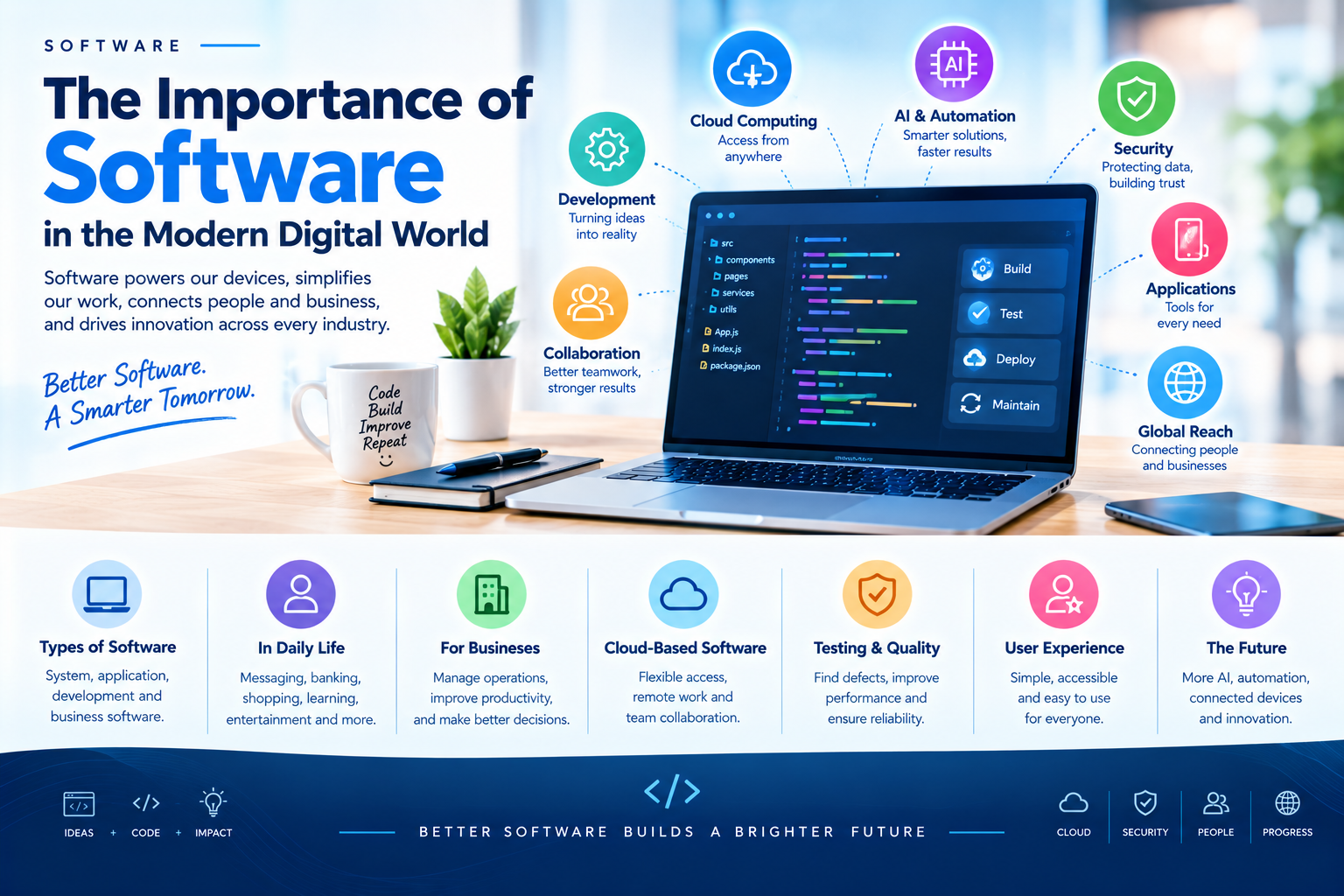
Software is a collection of programs, instructions, and data that tells a computer or digital device how to perform specific tasks. It allows users to operate devices, access information, create documents, communicate with others, and run applications. Common examples include operating systems, web browsers, mobile applications, and business management tools.
Types of Software
Software can be divided into several categories based on its purpose. System software manages computer hardware and basic operations, while application software helps users perform specific tasks. Development software provides tools for creating and testing programs. Business software supports activities such as accounting, project management, customer service, and data analysis.
Software in Everyday Life
People use software every day, often without thinking about it. Messaging applications, navigation tools, online banking, shopping platforms, streaming services, and educational applications all depend on software. These tools make many daily activities faster, more accessible, and more convenient.
The Role of Software in Business
Businesses use software to manage operations, organize information, communicate with customers, and improve productivity. Customer relationship management systems, accounting applications, inventory tools, and project management platforms help teams work efficiently and make informed decisions.
Software Development
Software development is the process of designing, building, testing, deploying, and maintaining software applications. Developers gather requirements, plan features, write code, identify defects, and improve functionality. A well-organized development process helps create reliable software that meets user needs.
Software Testing and Quality
Software testing helps identify defects before they affect users. Testers check whether features work as expected, examine different user scenarios, and evaluate performance, usability, compatibility, and security. Regular testing and feedback help improve software quality and reliability.
Cloud-Based Software
Cloud-based software allows users to access applications and data over the internet rather than relying entirely on locally installed programs. It can support remote work, team collaboration, automatic updates, and flexible access across multiple devices.
Artificial Intelligence and Automation
Artificial intelligence is expanding what software can do. AI-powered applications can assist with content creation, data analysis, customer support, pattern recognition, and decision-making. Automation also helps reduce repetitive manual work, allowing people to focus on tasks that require creativity and judgment.
Software Security
Security is an important part of software development and maintenance. Vulnerabilities can expose systems and sensitive information to unauthorized access. Developers and organizations should use secure coding practices, apply updates, manage permissions, test for vulnerabilities, and protect user data.
User Experience and Accessibility
Successful software should be easy to understand and use. Clear navigation, readable text, consistent layouts, helpful error messages, and accessible controls can improve the user experience. Designing for different devices and user needs also makes applications more useful to a wider audience.
The Future of Software
Software will continue to evolve with advances in AI, cloud computing, automation, connected devices, and development tools. These innovations may create more personalized applications, improve business processes, and support new digital services across industries.
Conclusion
Software is a foundation of the modern digital world. It supports everyday activities, improves business efficiency, enables innovation, and connects people across different locations. By focusing on quality, security, usability, and continuous improvement, software developers and businesses can create solutions that deliver lasting value.