 January 30, 2026 - BY Admin
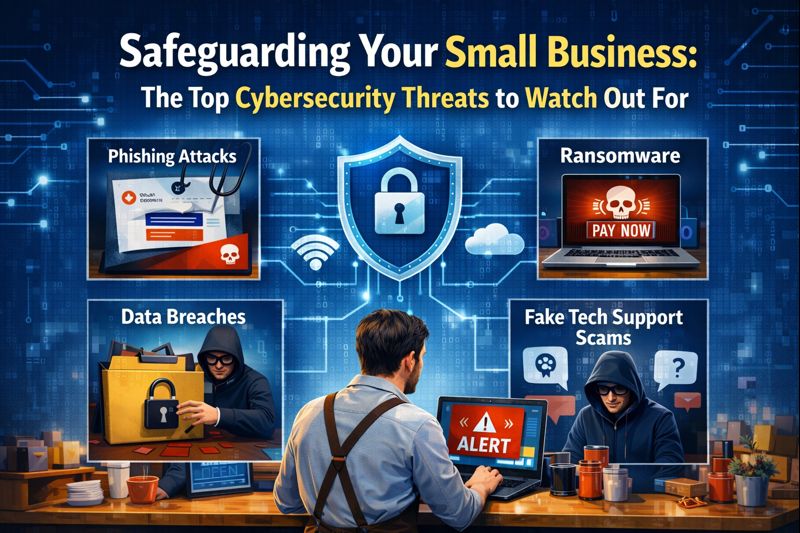
Safeguarding Your Small Business: The Top Cybersecurity Threats to Watch Out For
In today's digital age, small businesses are increasingly becoming targets for cyber attacks. As a small business owner, it is crucial to safeguard your company against cybersecurity threats to protect your sensitive data and maintain the trust of your customers. In this blog post, we will discuss the top cybersecurity threats that small businesses should watch out for and provide tips on how to protect your business from these threats.
Phishing Attacks
Phishing attacks are one of the most common cybersecurity threats that small businesses face. In a phishing attack, cybercriminals send emails or messages that appear to be from a legitimate source, such as a bank or a government agency, in an attempt to trick the recipient into revealing sensitive information, such as passwords or financial information. To protect your business from phishing attacks, it is important to educate your employees about the signs of a phishing email and to implement email filtering software that can detect and block malicious emails.
Ransomware
Ransomware is a type of malware that encrypts a victim's files and demands a ransom in exchange for the decryption key. Small businesses are particularly vulnerable to ransomware attacks because they often lack the resources to invest in robust cybersecurity measures. To protect your business from ransomware, it is important to regularly back up your data and store it in a secure location, such as a cloud-based backup service. Additionally, you should install antivirus software and keep it up to date to detect and block ransomware infections.
Weak Passwords
Weak passwords are a major security risk for small businesses, as they can easily be cracked by cybercriminals using automated tools. To protect your business from password-related attacks, it is important to enforce strong password policies that require employees to use complex passwords that are difficult to guess. Additionally, you should consider implementing multi-factor authentication, which requires users to provide more than one form of identification, such as a password and a fingerprint, to access sensitive information.
Unsecure Wi-Fi Networks
Unsecure Wi-Fi networks are another common cybersecurity threat that small businesses should watch out for. Cybercriminals can easily intercept data transmitted over unsecure Wi-Fi networks, such as passwords and financial information, putting your business at risk of a data breach. To protect your business from unsecure Wi-Fi networks, it is important to encrypt your Wi-Fi network using WPA2 security protocols and to use a virtual private network (VPN) when accessing sensitive information over public Wi-Fi networks.
Outdated Software
Outdated software is a major security risk for small businesses, as it can contain vulnerabilities that cybercriminals can exploit to gain access to your sensitive data. To protect your business from outdated software vulnerabilities, it is important to regularly update your software and operating systems with the latest security patches. Additionally, you should consider implementing a software inventory management system to keep track of all the software installed on your company's devices and ensure that it is up to date. By staying vigilant and implementing robust cybersecurity measures, you can safeguard your small business against the top cybersecurity threats and protect your sensitive data from cyber attacks.