 June 22, 2026 - BY Admin
Modern Data Storage: The Foundation of the Digital World
Introduction
In today's technology-driven world, data has become one of the most valuable assets for individuals and organizations. Every day, enormous amounts of information are created, processed, and stored across various systems. Effective storage solutions ensure that data remains secure, accessible, and available whenever needed.
What Is Data Storage?
Data storage refers to the methods and technologies used to save digital information for future use. Storage systems allow users to store, retrieve, manage, and protect data efficiently.
Importance of Storage
Storage is essential because it:
- Preserves important information
- Supports business operations
- Enables data backup and recovery
- Improves accessibility and collaboration
- Supports digital transformation initiatives
- Helps meet compliance requirements
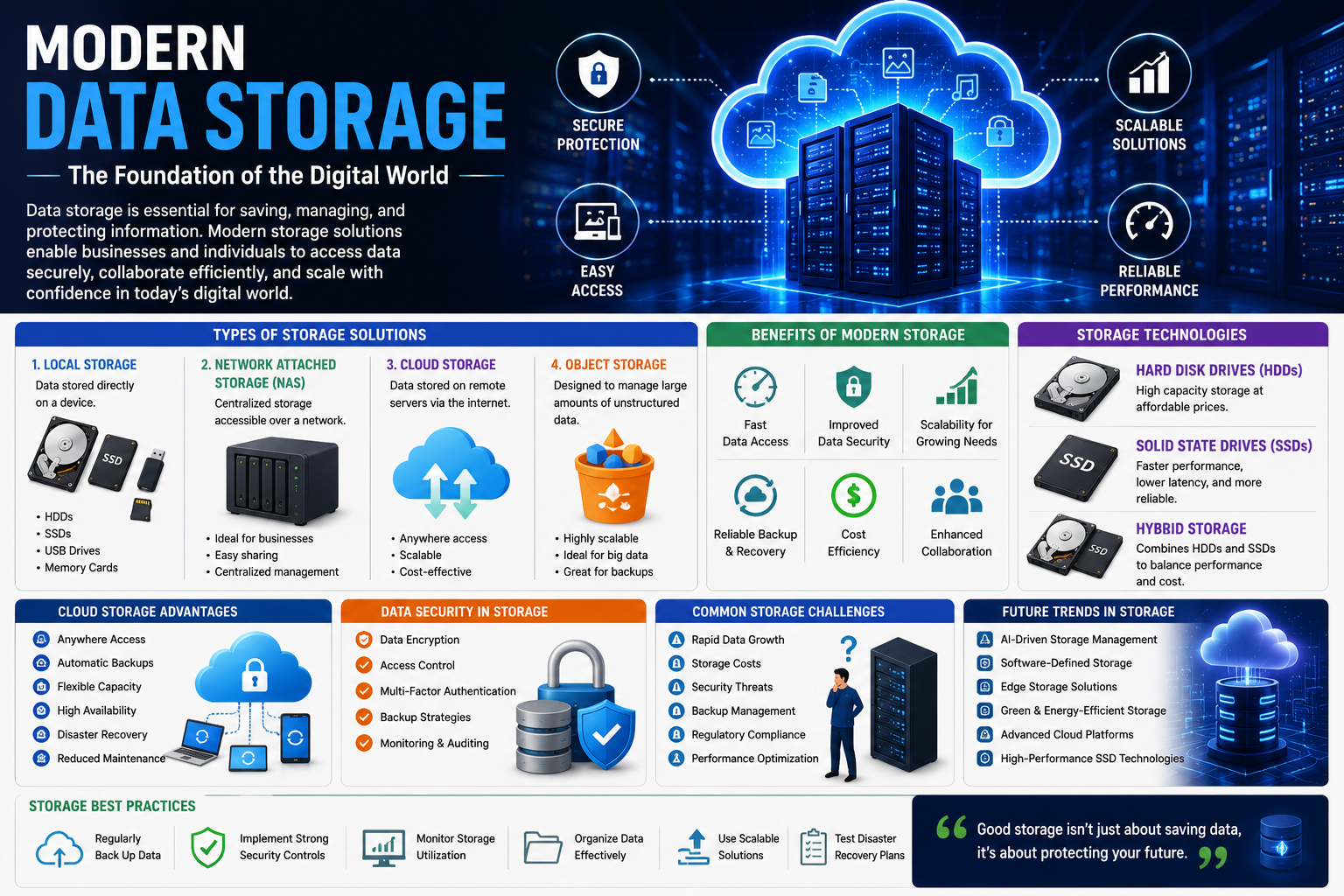
Types of Storage Solutions
1. Local Storage
Local storage refers to data stored directly on a device such as:
- Hard Disk Drives (HDDs)
- Solid State Drives (SSDs)
- USB Flash Drives
- Memory Cards
2. Network Attached Storage (NAS)
NAS devices provide centralized storage that multiple users can access over a network, making them ideal for businesses and collaborative environments.
3. Cloud Storage
Cloud storage allows users to store data on remote servers accessible through the internet. Popular benefits include scalability, remote access, and reduced infrastructure costs.
4. Object Storage
Object storage is designed to manage large volumes of unstructured data such as images, videos, and backups, making it popular for cloud environments.
Benefits of Modern Storage Systems
- Fast data access
- Improved data security
- Scalability for growing needs
- Reliable backup and recovery
- Cost efficiency
- Enhanced collaboration and sharing
Storage Technologies
Hard Disk Drives (HDDs)
Traditional storage devices that offer large capacities at affordable costs.
Solid State Drives (SSDs)
Modern storage devices that provide faster performance, lower latency, and greater reliability.
Hybrid Storage
A combination of HDDs and SSDs that balances performance and cost.
Cloud Storage Advantages
Cloud storage has transformed data management by offering:
- Anywhere access
- Automatic backups
- Flexible storage capacity
- High availability
- Disaster recovery support
- Reduced maintenance requirements
Data Security in Storage
Protecting stored data is a top priority. Organizations implement security measures such as:
- Data encryption
- Access control policies
- Multi-factor authentication
- Backup strategies
- Monitoring and auditing systems
Common Storage Challenges
Organizations often face challenges such as:
- Rapid data growth
- Storage costs
- Data security threats
- Backup management
- Regulatory compliance
- Performance optimization
Future Trends in Storage
The storage industry continues to evolve with innovations including:
- AI-driven storage management
- Software-defined storage
- Edge storage solutions
- Green and energy-efficient storage
- Advanced cloud storage platforms
- High-performance SSD technologies
Storage Best Practices
To maximize storage efficiency:
- Regularly back up important data
- Implement strong security controls
- Monitor storage utilization
- Organize data effectively
- Use scalable storage solutions
- Test disaster recovery plans
Conclusion
Storage is the backbone of the digital ecosystem, enabling individuals and businesses to manage growing volumes of information securely and efficiently. As technology advances, modern storage solutions will continue to play a critical role in supporting innovation, business continuity, and digital transformation.