 October 26, 2026 - BY Admin
Cybersecurity: Protecting Businesses in the Digital World
What Is Cybersecurity?
Cybersecurity is the practice of protecting computers, networks, applications, and digital information from unauthorized access, attacks, and damage.
It includes security technologies, policies, and practices designed to identify threats, prevent attacks, and respond to security incidents. From small businesses to large enterprises, cybersecurity helps protect valuable information and maintain reliable operations.
Why Is Cybersecurity Important?
Businesses store and manage sensitive information such as customer records, financial details, employee information, and confidential documents. Without proper protection, this information can become a target for cybercriminals.
Effective cybersecurity helps organizations:
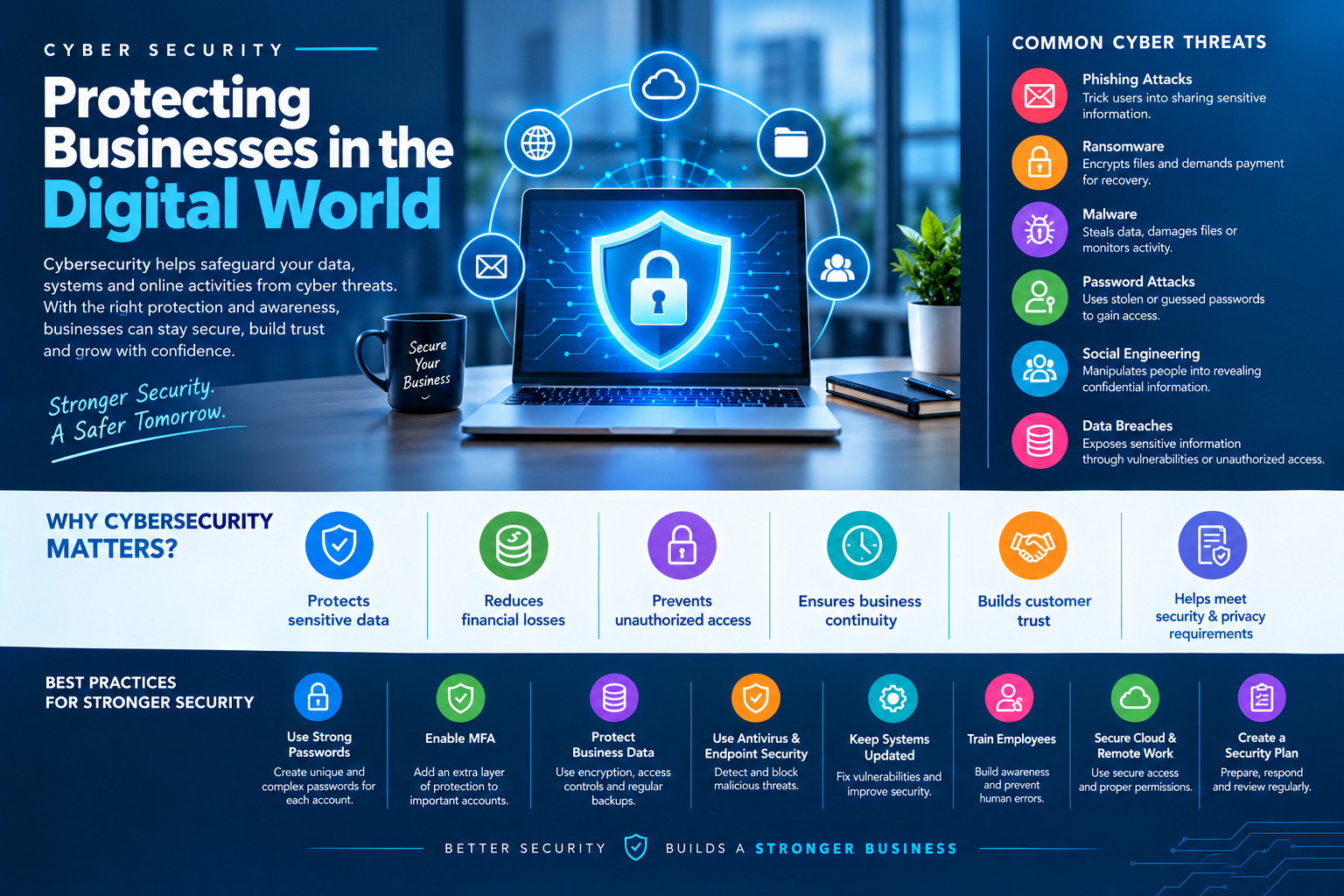
Protect confidential business and customer data.
Reduce the risk of financial losses.
Prevent unauthorized system access.
Maintain business continuity.
Protect their reputation and customer relationships.
Meet applicable security and privacy requirements.
Cybersecurity is not only a technical responsibility; it is an important part of overall business management.
Common Types of Cyber Threats
Understanding common cyber threats helps businesses recognize risks and take preventive action.
Phishing Attacks: Cybercriminals send fraudulent emails, messages, or websites to trick people into sharing passwords, financial information, or other sensitive data.
Ransomware: Malicious software encrypts files or disrupts systems and demands payment for recovery. Reliable backups and effective security controls can reduce the impact.
Malware: Malicious software can steal information, damage files, monitor activities, or provide unauthorized access to a device.
Password Attacks: Attackers may use stolen credentials, automated guessing, or reused passwords to access accounts.
Social Engineering: Criminals manipulate people into revealing confidential information or performing unsafe actions.
Data Breaches: Sensitive information may be exposed through compromised accounts, vulnerable systems, misconfigured services, or unauthorized access.
The Importance of Strong Passwords
Passwords are often the first line of defense for online accounts and business systems. Weak or reused passwords make it easier for attackers to gain access.
Organizations and individuals should use long, unique passwords for different accounts. A reputable password manager can help generate and securely store them.
Multifactor authentication (MFA) adds another layer of protection by requiring an additional verification method. Enabling MFA on email, administrative accounts, cloud services, and other important systems can significantly improve account security.
Protecting Business Data
Business data is one of an organization's most valuable digital assets. Losing it or exposing it to unauthorized users can cause operational, financial, and reputational damage.
To protect important information, businesses should use encryption where appropriate, restrict access based on job responsibilities, maintain secure backups, and regularly review permissions.
Employees should only have access to the information they need for their work. Sensitive files should be stored in approved locations, and outdated accounts should be disabled when access is no longer required.
The Role of Antivirus and Endpoint Security
Antivirus and endpoint security solutions help protect computers and other devices from malicious software and suspicious activity.
Depending on their capabilities, these tools may detect malware, block harmful files, monitor system behavior, and provide alerts about potential threats.
However, no single security product can prevent every attack. Endpoint protection should be combined with software updates, secure configurations, access controls, employee awareness, and regular backups.
Keeping Software and Systems Updated
Outdated software may contain security vulnerabilities that attackers can exploit. Developers release updates to fix known issues, improve stability, and strengthen protection.
Businesses should regularly update operating systems, browsers, applications, security tools, and network equipment. Automated updates can help, but organizations should also verify that important updates install successfully.
Systems that are no longer supported should be replaced or protected through an appropriate risk-management plan.
Employee Awareness and Cybersecurity Training
Employees play an important role in protecting an organization's digital environment. A single unsafe link, exposed password, or incorrectly shared file can create significant security risks.
Regular cybersecurity training should teach employees how to recognize suspicious messages, verify unexpected requests, protect account credentials, handle sensitive information, and report possible incidents.
Businesses should encourage employees to report mistakes and suspicious activity promptly. Early reporting can help security teams respond before an incident becomes more serious.
Cloud Security and Remote Work
Cloud platforms and remote work tools allow employees to access information from different locations. However, they also require careful security management.
Businesses should use multifactor authentication, secure device configurations, appropriate sharing permissions, and reliable monitoring. Administrators should review access regularly and remove unnecessary permissions.
Employees should avoid using unsecured networks for sensitive work unless suitable protections are in place. Organizations should also establish clear policies for company devices, personal devices, and remote access.
Creating a Cybersecurity Plan
A cybersecurity plan helps an organization prepare for potential threats and respond effectively when incidents occur.
An effective plan should include:
Identify critical assets: Determine which systems, applications, and data are most important.
Assess risks: Identify vulnerabilities and evaluate potential business impact.
Implement security controls: Apply suitable protection, access restrictions, updates, and monitoring.
Prepare backups: Maintain secure copies of important data and test recovery procedures.
Develop an incident response plan: Define who should respond, what steps to take, and how to communicate.
Review security regularly: Test controls, address weaknesses, and update procedures as business needs change.
A cybersecurity plan should be reviewed periodically and after significant changes to systems or business operations.
The Future of Cybersecurity
Cybersecurity continues to evolve as businesses adopt artificial intelligence, cloud computing, connected devices, and advanced digital services.
Security teams are increasingly using automation and AI-assisted tools to analyze activity, identify unusual behavior, and prioritize potential threats. At the same time, attackers may use new technologies to create more convincing scams and develop sophisticated attack methods.
Organizations will need to combine modern security tools with skilled professionals, effective policies, and ongoing employee education to manage emerging risks.
Conclusion
Cybersecurity is essential for protecting business information, maintaining reliable systems, and building customer confidence. By using strong passwords, enabling multifactor authentication, updating software, securing devices, training employees, and maintaining tested backups, organizations can reduce their exposure to common cyber threats.
Cybersecurity is an ongoing responsibility rather than a one-time task. Consistent monitoring, regular reviews, and continuous improvement help businesses remain prepared in an increasingly connected digital world.